
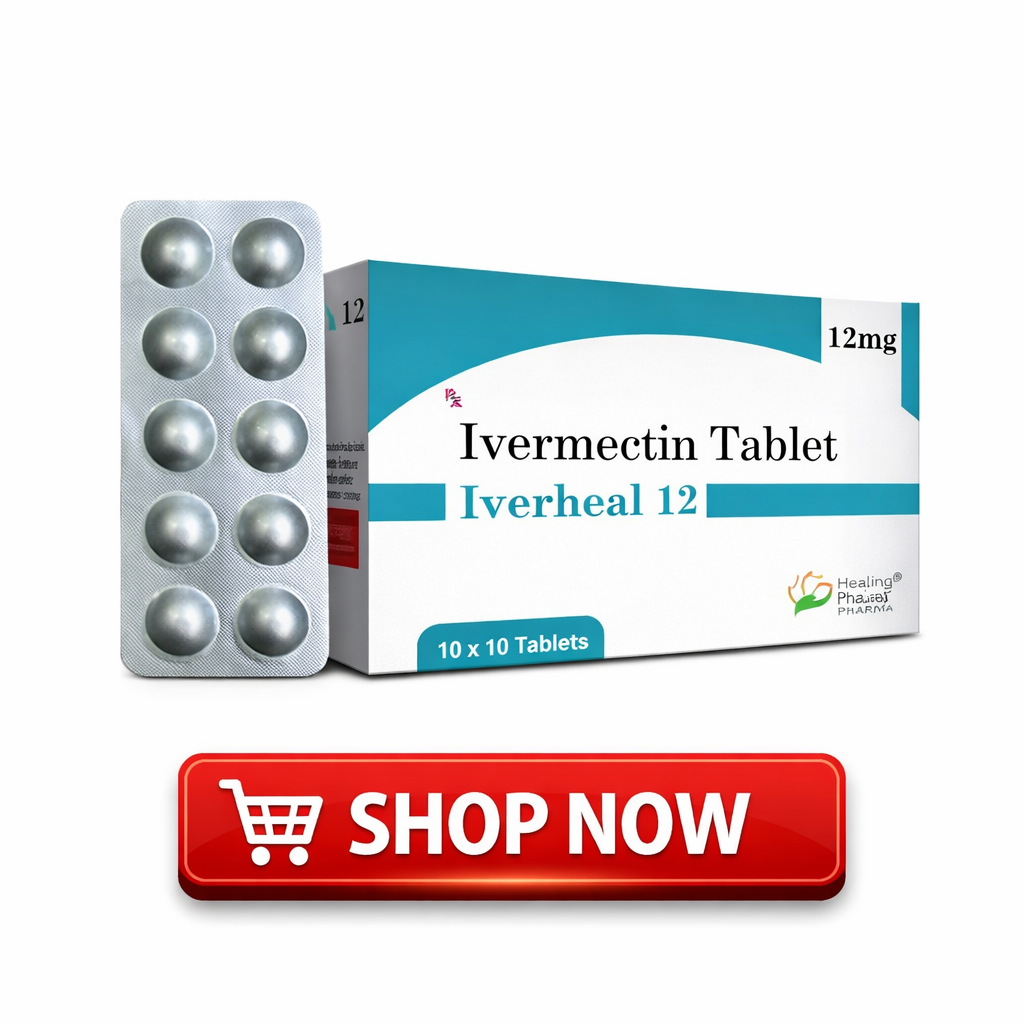
Yes, Iverheal 12 is generally very safe when used correctly for approved conditions. But like all medications, it’s not risk-free, and there are important things you need to know before taking it.
The Quick Safety Summary
Table
| Question | Answer |
|---|---|
| Is Iverheal 12 safe for most adults? | ✅ Yes, when prescribed by a doctor for approved conditions |
| Are side effects common? | ❌ No — less than 4% of patients experience side effects |
| Can it harm my brain? | ❌ No — your blood-brain barrier protects you at normal doses |
| Is it safe during pregnancy? | ⚠️ Generally avoid unless benefits clearly outweigh risks |
| Can I take it with other medications? | ⚠️ Some interactions exist — tell your doctor everything you’re taking |
| Is veterinary ivermectin safe for humans? | ❌ No — never use animal products |
| Is it safe for COVID-19? | ❌ No — not approved, not effective, potentially dangerous |
Why Iverheal 12 Is Considered Very Safe
Ivermectin has one of the best safety records of any antiparasitic medication in history. Here’s why:
1. Over 40 Years of Real-World Use
Since its introduction for human use in 1987, ivermectin has been administered to approximately 250 million people annually through mass drug administration programs. That’s billions of doses over four decades, with remarkably few serious adverse events.
2. Nobel Prize-Winning Science
The 2015 Nobel Prize in Physiology or Medicine was awarded to William C. Campbell and Satoshi Omura for discovering ivermectin. The Nobel Committee specifically noted its “immeasurable” impact on human health and its excellent safety profile.
3. Selective Toxicity — It Targets Parasites, Not Humans
Ivermectin works by binding to glutamate-gated chloride channels (GluCls) — special ion channels found in parasite nerve and muscle cells. Humans don’t have these channels. This means the drug paralyzes and kills parasites while having virtually no effect on human cells at therapeutic doses.
4. Your Brain Is Protected
Even though ivermectin can affect similar channels in mammals, your body has a built-in defense: a protein called P-glycoprotein (P-gp) that acts like a security guard at your blood-brain barrier. It actively pumps ivermectin away from your brain before it can reach toxic concentrations.
This is why ivermectin is remarkably safe for humans at standard doses — but also why certain animals (like collie dogs with MDR1 gene mutations) can suffer severe neurotoxicity. Never use veterinary ivermectin for humans.
Common Side Effects: What to Expect
Most people who take Iverheal 12 experience no side effects at all. When side effects do occur, they’re usually mild and go away on their own within 24–48 hours.
Mild Side Effects (Occur in <4% of Patients)
Table
| Side Effect | How Common | How Long It Lasts |
|---|---|---|
| Dizziness | Common | Usually a few hours |
| Nausea or vomiting | Common | 12–24 hours |
| Diarrhea | Common | 12–24 hours |
| Fatigue or tiredness | Common | 1–2 days |
| Headache | Common | A few hours to 1 day |
| Abdominal pain | Less common | 12–24 hours |
| Itching or mild rash | Common in onchocerciasis/scabies | 2–7 days |
What to do: These symptoms usually don’t require medical attention. Rest, stay hydrated, and avoid driving if you feel dizzy. If symptoms persist beyond 48 hours, contact your doctor.
The Mazzotti Reaction (Onchocerciasis Patients Only)
If you’re taking Iverheal 12 for river blindness (onchocerciasis), you may experience a temporary worsening of symptoms within the first few days. This is called the Mazzotti reaction — an inflammatory response to the rapid death of millions of microfilariae (baby worms) in your skin.
Symptoms include:
- Intensified itching and skin rash
- Fever and chills
- Headache and muscle aches
- Swollen lymph nodes
- Low blood pressure or rapid heartbeat
Is it dangerous? Usually not. It’s actually a sign the medication is working. Symptoms typically peak within 24–48 hours and resolve within a week. However, in patients with very high microfilarial loads, reactions can be severe and require medical supervision.
Serious Side Effects: When to Seek Emergency Care
Serious adverse reactions to Iverheal 12 are rare in the absence of Loa loa co-infection, but they can occur. Seek immediate medical attention if you experience:
🚨 Difficulty breathing or swallowing 🚨 Swelling of face, lips, tongue, or throat (possible anaphylaxis) 🚨 Severe skin rash, blistering, or peeling 🚨 Confusion, seizures, or loss of consciousness 🚨 Severe eye pain, redness, or vision changes 🚨 Fainting or severe dizziness 🚨 Fast or irregular heartbeat 🚨 Severe neck or back pain 🚨 Loss of bladder or bowel control
These symptoms could indicate a severe allergic reaction, neurological effects (extremely rare in humans with intact P-gp), or other serious complications.
Who Should NOT Take Iverheal 12?
Absolute Contraindications
1. Known Allergy to Ivermectin If you’ve had a previous allergic reaction to ivermectin or any component of the formulation, you should not take it again.
2. Loa loa Co-Infection (African Eye Worm) This is the most critical safety concern. In Central and West Africa, a parasite called Loa loa (African eye worm) co-exists with onchocerciasis. If you have a high Loa loa microfilarial load (>8,000 microfilariae/mL), taking ivermectin can cause:
- Severe encephalopathy (brain inflammation)
- Coma
- Death
If you’ve lived in or traveled to Central/West African countries (Cameroon, Central African Republic, Congo, Gabon, Equatorial Guinea, Nigeria, etc.), your doctor should screen for Loa loa before prescribing ivermectin.
Relative Contraindications / Use With Caution
Table
| Population | Concern | Recommendation |
|---|---|---|
| Children under 15 kg (33 lbs) | Theoretical concern about immature blood-brain barrier | Use with caution; consider topical alternatives for scabies |
| Pregnant women | Limited safety data; Category C | Prefer permethrin for scabies; use oral ivermectin only if benefits clearly outweigh risks |
| Breastfeeding women | Minimal data | Generally considered low risk (<2% in breast milk); consult your doctor |
| Elderly (>65 years) | Reduced hepatic function | No dose adjustment typically needed; monitor for side effects |
| People with liver disease | Drug metabolized by CYP3A4 in liver | Use with caution; may need dose adjustment |
| Immunocompromised patients | Risk of persistent or hyperinfection | Ensure adequate treatment duration; monitor closely |
| People with severe asthma | Rare reports of bronchospasm | Use with caution and medical supervision |
Children: New Evidence
Historically, ivermectin was contraindicated in children under 5 years or weighing less than 15 kg. However, a systematic review of 19 studies including 1,088 children weighing <15 kg found an adverse event rate of only 1.4%, with all reported adverse events being mild and self-limiting.
Despite this reassuring data, most guidelines (including the CDC) continue to recommend caution in children under 15 kg until further safety data are available. If your child needs treatment for scabies, permethrin 5% cream is usually the preferred first-line option.
Pregnancy and Breastfeeding: What the Evidence Says
Pregnancy
Ivermectin is classified as Pregnancy Category C — meaning risk cannot be ruled out based on available data.
What the guidelines say:
- The European guideline does not recommend oral ivermectin for scabies in pregnant women
- In France, oral ivermectin is used during pregnancy as first- or second-line therapy for scabies when topical treatments fail
- Reports of accidental administration during pregnancy have not shown adverse outcomes
- The CDC states that the potential risk in pregnant women is low
Bottom line: For pregnant women with scabies, permethrin 5% cream is generally preferred as first-line therapy when available. For strongyloidiasis or onchocerciasis during pregnancy, the decision should weigh the benefits of treatment against potential risks, ideally in consultation with an obstetrician and infectious disease specialist.
Breastfeeding
Less than 2% of a maternal dose of ivermectin is found in breast milk. This is considered a negligible amount, and the drug is generally regarded as compatible with breastfeeding. However, as with all medications during lactation, consult your healthcare provider before taking Iverheal 12.
Drug Interactions: What to Watch Out For
Iverheal 12 can interact with several medications and substances. Always provide your doctor with a complete list of everything you’re taking.
Major Interactions
Table
| Drug/Substance | What Happens | What to Do |
|---|---|---|
| Warfarin (blood thinner) | Increased bleeding risk | Monitor INR closely; dose adjustment may be needed |
| Alcohol | Worsens dizziness, nausea | Avoid during treatment and for 24 hours after |
| Rifampin, carbamazepine, phenytoin | Reduce ivermectin levels (CYP3A4 inducers) | May decrease effectiveness; doctor may adjust dose |
| Ketoconazole, itraconazole, erythromycin | Increase ivermectin levels (CYP3A4 inhibitors) | Monitor for increased side effects |
| Grapefruit juice | Increases ivermectin levels | Avoid around time of dosing |
| Sedatives, sleep aids, anti-anxiety meds | Additive drowsiness | Use caution; avoid driving or operating machinery |
| Other antiparasitics (albendazole, thiabendazole) | Potential additive effects | Usually safe; monitor for increased side effects |
Scabies-Specific Interactions
The CDC specifically notes potential interactions between oral ivermectin and:
- Azithromycin
- Trimethoprim/sulfamethoxazole
- Cetirizine
Always disclose all medications to your healthcare provider.
The COVID-19 Safety Issue: Why Misuse Is Dangerous
One of the biggest safety concerns around Iverheal 12 in recent years has been misuse for COVID-19. Here’s why this is dangerous:
The Science Doesn’t Support It
- Laboratory studies required 100x higher concentrations than safe human dosing to affect SARS-CoV-2 in petri dishes
- Large clinical trials (I-TECH, PRINCIPLE, TOGETHER) found no benefit for COVID-19 patients
- The FDA, CDC, WHO, and NIH all advise against using ivermectin for COVID-19
The Real Dangers of Misuse
- Veterinary product consumption: Some people consumed ivermectin formulated for horses and cattle, resulting in overdose, seizures, coma, and death
- Self-medication: Inappropriate dosing without medical supervision caused adverse events
- Delay of evidence-based care: Patients relying on ivermectin delayed seeking proven treatments like antivirals, monoclonal antibodies, or vaccination
Bottom line: Ivermectin is a safe, Nobel Prize-winning antiparasitic drug with established, life-saving indications. It is not an effective treatment for COVID-19, and using it for this purpose outside of clinical trials is not supported by scientific evidence and can be harmful.
Veterinary vs. Human Ivermectin: A Life-or-Death Difference
This cannot be stressed enough: veterinary and human ivermectin are completely different products.
Table
| Feature | Human Ivermectin | Veterinary Ivermectin |
|---|---|---|
| Concentration | 3 mg, 6 mg, or 12 mg tablets | Often 1% injectable solutions (10 mg/mL) or pour-ons |
| Excipients | Pharmaceutical-grade, human-safe | May contain solvents, carriers, or preservatives unsafe for humans |
| Purity standards | Higher purity requirements | Different purity specifications |
| Route | Oral (tablets) or topical (cream/lotion) | Oral paste, injectable, pour-on, feed additive |
| Bioavailability | Optimized for human GI tract | Optimized for target animal species |
| Dosing guidance | Weight-based for humans | Designed for specific animal weights |
Why Veterinary Products Are Dangerous for Humans
- Concentration overdose: Veterinary products are often highly concentrated. A single mL of 1% injectable ivermectin contains 10 mg — nearly equivalent to an entire human tablet
- Toxic excipients: Veterinary formulations may contain ingredients like propylene glycol or other solvents that can be toxic when injected or consumed by humans
- Lack of quality control: Veterinary products are not manufactured to pharmaceutical-grade standards required for human consumption
- No dosing guidance: Veterinary products provide no human dosing instructions
Never use veterinary ivermectin for human treatment. The FDA has issued explicit warnings against this practice, and cases of ivermectin toxicity from veterinary product misuse have resulted in hospitalization, coma, and death.
How to Use Iverheal 12 Safely: A Checklist
✅ Get a proper diagnosis — don’t self-diagnose or self-medicate
✅ Obtain a prescription from a licensed healthcare provider
✅ Buy only from licensed pharmacies — avoid unverified online sellers
✅ Verify the product — check packaging, batch numbers, and expiration dates
✅ Let your doctor calculate your dose — it’s always weight-based
✅ Take on an empty stomach unless told otherwise
✅ Tell your doctor about all medications you’re taking
✅ Avoid alcohol during treatment
✅ Complete the full course and attend follow-up appointments
✅ Never share your medication with others
✅ Never use veterinary products
✅ Store below 30°C (86°F) in a dry place away from children
What to Expect After Taking Iverheal 12
For Strongyloidiasis
- Symptoms usually improve within 2–3 days
- You may need a follow-up stool test in 2–4 weeks to confirm clearance
- If symptoms persist, retreatment may be necessary
For Onchocerciasis
- Temporary increase in itching and rash is common (Mazzotti reaction)
- Skin and eye symptoms improve gradually over months
- You will need retreatment every 6–12 months
- Treatment may continue for 10–15 years
For Scabies
- Itching may persist for 2–4 weeks after successful treatment — this is normal
- New bumps may appear for 1–2 weeks — these are allergic reactions to dead mites, not treatment failure
- All contacts must be treated simultaneously
- If live mites are seen after 2–4 weeks, retreatment is needed
For Head Lice
- Most patients need only one application of topical lotion
- Dead lice may remain attached to hair — comb out with fine-tooth comb if desired
- Retreat only if live lice are seen 7–10 days after treatment
Frequently Asked Safety Questions
Q: Can Iverheal 12 damage my liver? A: Ivermectin is metabolized by the liver, but hepatotoxicity is extremely rare. People with pre-existing liver disease should use it with caution and under medical supervision.
Q: Is it addictive? A: No. Ivermectin has no addictive properties. It’s typically taken as a single dose or short course.
Q: Can I overdose on Iverheal 12? A: Yes, if you take more than prescribed. Symptoms of overdose include nausea, vomiting, diarrhea, headache, dizziness, drowsiness, tremors, and in severe cases, seizures or coma. Always follow your doctor’s exact dosing instructions.
Q: Is it safe for diabetics? A: Yes, ivermectin doesn’t significantly affect blood sugar. However, tell your doctor about all your medications to check for interactions.
Q: Can I take it with coffee? A: Yes, coffee is generally fine. Just avoid taking it with a full meal or high-fat foods unless your doctor specifically instructs otherwise.
Q: Is generic Iverheal 12 as safe as brand-name Stromectol? A: Yes. Generic medications contain the same active ingredient and must meet the same safety and quality standards as brand-name drugs.
Q: What if I accidentally took veterinary ivermectin? A: Seek emergency medical attention immediately. Call Poison Control or go to the nearest emergency room. Bring the product packaging with you.
The Verdict: Is Iverheal 12 Safe?
Yes — Iverheal 12 is very safe when used correctly for approved indications, under medical supervision, at appropriate weight-based doses.