
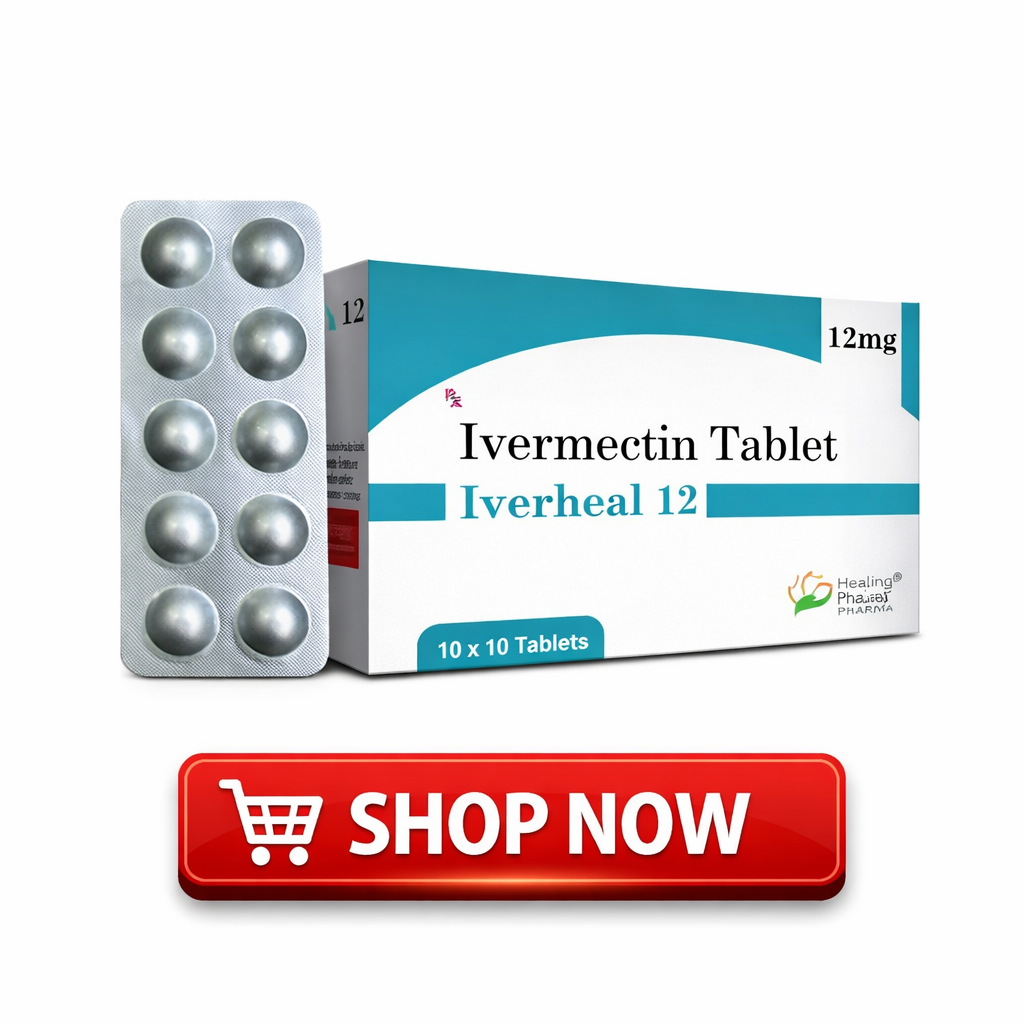
Iverheal 12: Uses, Benefits, Side Effects & Everything You Need to Know
What Is Iverheal 12?
Iverheal 12 is a brand-name version of ivermectin 12 mg, a widely used antiparasitic medication. Ivermectin belongs to the avermectin class of macrocyclic lactones — compounds originally isolated from soil bacteria that have revolutionized the treatment of parasitic diseases in both humans and animals.
Since its discovery in the 1970s and subsequent Nobel Prize-winning recognition in 2015, ivermectin has been administered to approximately 250 million people annually worldwide for the control of various parasitic diseases. It is listed on the WHO Model List of Essential Medicines and remains the cornerstone of global efforts to eliminate river blindness, control strongyloidiasis, and manage scabies in resource-limited settings.
Iverheal 12, like other ivermectin 12 mg tablets, is primarily manufactured and distributed in regions where parasitic diseases remain endemic. The 12 mg strength is particularly relevant for weight-based dosing in adults, as standard therapeutic doses typically range from 150 to 200 micrograms per kilogram of body weight. For a 60-80 kg adult, a single 12 mg tablet often represents the appropriate single-dose treatment for many parasitic infections.
This comprehensive guide explores every facet of Iverheal 12 — from its fascinating scientific origins to its modern clinical applications, safety considerations, and the controversies that have surrounded this remarkable drug in recent years.
The Remarkable History of Ivermectin
Discovery in a Japanese Golf Course
The story of ivermectin begins not in a pharmaceutical laboratory, but in the soil near a golf course in Japan. In 1970, Japanese microbiologist Satoshi Omura of the Kitasato Institute collected a soil sample containing a previously unknown species of bacteria, later named Streptomyces avermitilis. Omura, known for his habit of carrying specimen bags wherever he traveled, had spent years collecting thousands of microbial samples from environments around the world.
The extract from this particular bacterium demonstrated remarkable activity against nematodes (roundworms) in preliminary screening. Omura sent the sample to the Merck Institute for Therapeutic Research in the United States, where Irish parasitologist William C. Campbell and his team conducted further testing. They discovered that the extract contained potent macrocyclic lactone compounds — the avermectins — capable of eliminating a wide variety of nematode infections in mice with unprecedented potency and safety.
From Avermectin to Ivermectin
Merck chemists made a minor chemical modification to the naturally occurring avermectin B1 compound to create ivermectin, a more refined and stable derivative. The drug was first marketed for veterinary use in 1981 and quickly became a “blockbuster drug” in animal medicine, effective against heartworm in dogs, gastrointestinal nematodes in livestock, and ectoparasites such as fleas and ticks.
The transition from veterinary to human medicine was remarkably swift. Recognizing the devastating impact of onchocerciasis (river blindness) in sub-Saharan Africa, Merck initiated clinical trials for human use. In 1987, Merck made the unprecedented commitment to donate ivermectin (under the brand name Mectizan) for as long as needed to treat river blindness — a donation program that continues today and has distributed billions of treatments worldwide.
The 2015 Nobel Prize in Physiology or Medicine
On October 5, 2015, the Nobel Assembly at Karolinska Institutet awarded the Nobel Prize in Physiology or Medicine to three scientists: William C. Campbell, Satoshi Omura, and Youyou Tu (for her work on artemisinin). The Nobel Committee specifically recognized Campbell and Omura “for their discoveries concerning a novel therapy against infections caused by roundworm parasites.”
The Nobel Prize citation highlighted that ivermectin’s impact on human health and the reduction of human suffering was “immeasurable.” The drug had transformed the prospects of millions of people in some of the world’s poorest regions, offering hope where previously there had been only blindness and disability.
What Is Iverheal 12 Used For?
Iverheal 12 is primarily prescribed to treat parasitic infections in humans. Its FDA-approved and clinically established uses include:
1. Strongyloidiasis (Intestinal Roundworm Infection)
Caused by Strongyloides stercoralis, this infection affects the intestinal tract. Ivermectin is the treatment of choice because it effectively targets the parasite where other drugs may fail. This parasite infects an estimated 300–600 million people worldwide, primarily in tropical and subtropical regions.
S. stercoralis is unique among human helminths in its ability to complete its entire life cycle within a single host through a process called autoinfection. The parasite’s larvae can mature within the human intestine and reinfect the same individual, potentially maintaining infection for decades. In immunocompromised individuals — particularly those receiving corticosteroids, organ transplant recipients, or patients with hematologic malignancies — this autoinfective cycle can accelerate dramatically, leading to hyperinfection syndrome or disseminated strongyloidiasis, conditions with mortality rates exceeding 50% if untreated.
Treatment Protocol:
- Standard infection: 200 mcg/kg orally for 1–2 days
- Hyperinfection syndrome: 200 mcg/kg per day orally until stool and/or sputum exams remain negative for at least 2 weeks
- Follow-up stool examinations should be performed 2–4 weeks after treatment to confirm clearance
Ivermectin has proven more effective than albendazole for strongyloidiasis, with a relative risk of cure of 1.79 compared to albendazole, and fewer adverse events than thiabendazole.
2. Onchocerciasis (River Blindness)
A devastating tropical disease caused by Onchocerca volvulus, transmitted through blackfly bites. The disease affects primarily rural populations in sub-Saharan Africa and Yemen, with smaller endemic foci in Latin America.
Adult O. volvulus worms can live for 10–15 years within subcutaneous nodules, producing millions of microfilariae that migrate to the skin and eyes. The death of microfilariae in ocular tissues triggers inflammatory responses that lead to visual impairment and permanent blindness. Skin manifestations include severe itching, disfiguring skin conditions, and “leopard skin” depigmentation.
Treatment Protocol:
- Standard dose: 150 mcg/kg orally as a single dose
- Frequency: Every 6–12 months for 10–15 years (the lifespan of adult worms)
- For patients who have left endemic areas: Every 3–6 months may be considered to shorten symptom duration
Ivermectin does not kill adult worms, but it eliminates microfilariae and temporarily sterilizes female worms. For macrofilaricidal (adult-killing) therapy, doxycycline (200 mg daily for 6 weeks) targets the Wolbachia endosymbiotic bacteria that adult worms require for survival.
3. Scabies
Scabies, caused by the mite Sarcoptes scabiei var. hominis, affects an estimated 207 million people at any given time, making it one of the world’s most common parasitic diseases. The WHO added scabies to its list of neglected tropical diseases in 2021 due to its disproportionate burden in resource-limited settings.
Female mites burrow into the stratum corneum (outer skin layer), laying eggs that hatch within 2–3 days. Larvae mature into adults within 9–17 days, perpetuating the infestation. Clinical features include intensely pruritic (itchy) papular rashes, particularly affecting the finger webs, wrists, axillae, waistline, and buttocks, with symptoms characteristically worsening at night.
Treatment Protocols:
Classic Scabies:
- Oral ivermectin: 200 mcg/kg, repeated in 7–14 days (two doses total)
- Topical permethrin 5% cream: Applied to entire body from neck down, left for 8–14 hours, then washed off; may be repeated in 7 days
- The CDC notes that oral ivermectin and topical permethrin have “similar efficacy for cure of scabies”
Crusted (Norwegian) Scabies:
- Oral ivermectin combined with topical permethrin
- Ivermectin dosing varies by severity: 3 doses (days 1, 2, and 8), 5 doses (days 1, 2, 8, 9, and 15), or 7 doses (days 1, 2, 8, 9, 15, 22, and 29)
- Keratolytic creams may be used to reduce crusting and improve topical agent penetration
A landmark 2026 multicenter, assessor-blinded, cluster-randomized clinical trial published in the BMJ compared oral ivermectin versus 5% permethrin cream in children and adults with classic scabies, providing high-quality evidence to guide first-line therapeutic choices.
4. Head Lice (Pediculosis Capitis)
The FDA approved ivermectin 0.5% lotion (Sklice) in 2012 for the treatment of head lice in patients aged 6 months and older. Unlike many other pediculicides, ivermectin lotion kills lice and appears to prevent newly hatched nymphs from surviving, though it does not kill eggs.
Treatment: Single application to dry hair without nit combing; retreatment should only occur after consultation with a healthcare provider. Oral ivermectin (200–400 mcg/kg, repeated in 9–10 days) is also effective but is not FDA-approved for this indication.
5. Rosacea
In December 2014, the FDA approved ivermectin 1% cream (Soolantra) for the once-daily treatment of inflammatory lesions of papulopustular rosacea. While the exact mechanism in rosacea is not fully understood, ivermectin’s anti-inflammatory properties — including inhibition of proinflammatory cytokine production and upregulation of the anti-inflammatory cytokine interleukin-10 — are believed to play key roles.
Additionally, Demodex folliculorum mites, which are more prevalent on the skin of rosacea patients, may contribute to inflammation, and ivermectin’s antiparasitic effects against these mites may provide additional benefit. Phase 3 clinical trials demonstrated superiority over vehicle cream, with some patients showing improvement as early as week 2.
How Does It Work?
Ivermectin belongs to the antiparasitic drug class. It works by:
- Binding to glutamate-gated chloride ion channels in the nerve and muscle cells of parasites
- This causes tonic paralysis and eventually kills the parasite
- It also blocks adult parasites from releasing larvae (microfilariae) for months, preventing disease progression
The selectivity of ivermectin for parasites over humans depends critically on the P-glycoprotein (P-gp) efflux pump, also known as multidrug resistance protein 1 (MDR1). This protein is highly expressed in the human blood-brain barrier and acts as a protective gatekeeper, actively pumping ivermectin out of the central nervous system (CNS) before it can reach toxic concentrations.
Because GluCls are not expressed in vertebrates, and because P-gp prevents ivermectin from accumulating in the mammalian CNS where GABA receptors are located, the drug has virtually no effect on human neurotransmission at therapeutic doses. This explains ivermectin’s remarkable safety profile — it paralyzes parasites while leaving human neural function completely unaffected.
However, this protective mechanism is not universal across all mammalian species. In certain dog breeds (particularly collies) and horses with MDR1 gene mutations or deficiencies, P-gp function is compromised, allowing ivermectin to cross the blood-brain barrier and cause severe neurotoxicity, including drowsiness, coma, and death. This species-specific toxicity underscores the importance of using only human-formulated ivermectin for human patients.
Dosage Guidelines
Accurate dosing is critical for ivermectin’s efficacy and safety. All human ivermectin dosing is weight-based.
Standard Dosing Table
Table
| Condition | Dose | Frequency | Duration |
|---|---|---|---|
| Strongyloidiasis | 200 mcg/kg | Single dose (may repeat in 2 weeks) | 1–2 days |
| Onchocerciasis | 150 mcg/kg | Every 6–12 months | 10–15 years |
| Scabies (classic) | 200 mcg/kg | Days 1 and 7–14 | 2 doses |
| Scabies (crusted) | 200 mcg/kg | Days 1, 2, 8 (± additional doses) | Variable |
| Head lice (oral) | 200–400 mcg/kg | Single dose, repeat in 9–10 days | 2 doses |
| Lymphatic filariasis | 200 mcg/kg | Single dose (annual MDA) | Annual |
| Soil-transmitted helminths | 200 mcg/kg | Daily for 2 days | 2 days |
| Cutaneous larva migrans | 200 mcg/kg | Single dose (repeat if needed) | 1–2 doses |
| Rosacea (topical) | 1% cream | Once daily | 12+ weeks |
| Head lice (topical) | 0.5% lotion | Single application | 1 application |
Practical Dosing Example
For a 70 kg (154 lb) adult:
- Onchocerciasis: 70 kg × 150 mcg/kg = 10,500 mcg = 10.5 mg (approximately one 12 mg tablet)
- Strongyloidiasis: 70 kg × 200 mcg/kg = 14,000 mcg = 14 mg (may require one 12 mg tablet plus additional 3 mg tablet, or rounding per clinical judgment)
- Scabies: 70 kg × 200 mcg/kg = 14 mg (two doses, 7–14 days apart)
Administration Instructions
- Take on an empty stomach with a full glass of water — at least 1 hour before or 2 hours after a meal
- Scabies exception: Some experts recommend taking with food to increase bioavailability
- Do not crush or chew tablets
- Store below 30°C (86°F)
Common Side Effects
Ivermectin is generally well-tolerated, with side effects reported in less than 4% of patients:
Table
| Mild Side Effects | Serious Side Effects (Seek Medical Help) |
|---|---|
| Dizziness | Severe allergic reaction (hives, swelling, breathing difficulty) |
| Nausea / vomiting | Eye pain, redness, or vision changes |
| Diarrhea | Confusion, seizures, trouble walking |
| Fatigue | Severe skin rash or blistering |
| Headache | Neck/back pain, loss of bladder/bowel control |
| Abdominal pain | Fast heartbeat, fainting |
The Mazzotti Reaction
In onchocerciasis patients, treatment with ivermectin can trigger the Mazzotti reaction — an inflammatory response to the rapid death of microfilariae. Symptoms include:
- Intense pruritus and skin rash
- Fever, headache, muscle aches
- Hypotension (low blood pressure)
- Tachycardia (rapid heart rate)
- Lymph node swelling
- Rarely, severe reactions including encephalopathy
These reactions are generally mild and transient, but in patients with heavy microfilarial loads, they can be more severe. Pretreatment assessment of microfilarial density is important in endemic areas.
Important Warnings
⚠️ Not for COVID-19: Ivermectin is NOT FDA-approved for treating or preventing COVID-19. Major health authorities including the FDA, CDC, NIH, and WHO advise against its use for this purpose.
⚠️ Never use veterinary products: Animal formulations are highly concentrated and can cause overdose, seizures, coma, or death.
⚠️ Who should avoid it:
- Children under 15 kg (33 lbs)
- Pregnant women (unless clearly necessary)
- People with known allergies to ivermectin
- Those with liver disease or certain immune conditions
Drug Interactions
Ivermectin may interact with:
- Warfarin and other blood thinners (increased bleeding risk)
- Alcohol (can worsen side effects)
- CYP3A4 inducers (e.g., rifampin, carbamazepine, phenytoin, St. John’s wort) — may reduce ivermectin efficacy
- CYP3A4 inhibitors (e.g., ketoconazole, itraconazole, erythromycin, grapefruit juice) — may increase ivermectin levels
- Other antiparasitic drugs like albendazole or levamisole
Always inform your doctor of all medications, supplements, and herbal products you’re taking.
Iverheal 12 is a powerful, Nobel Prize-winning antiparasitic medication with a proven safety record when used correctly for approved indications. It has transformed the treatment of river blindness and strongyloidiasis worldwide and remains invaluable in dermatology for scabies. However, it is not a cure-all — self-medication, especially with veterinary products or for unapproved uses like COVID-19, can be dangerous.