
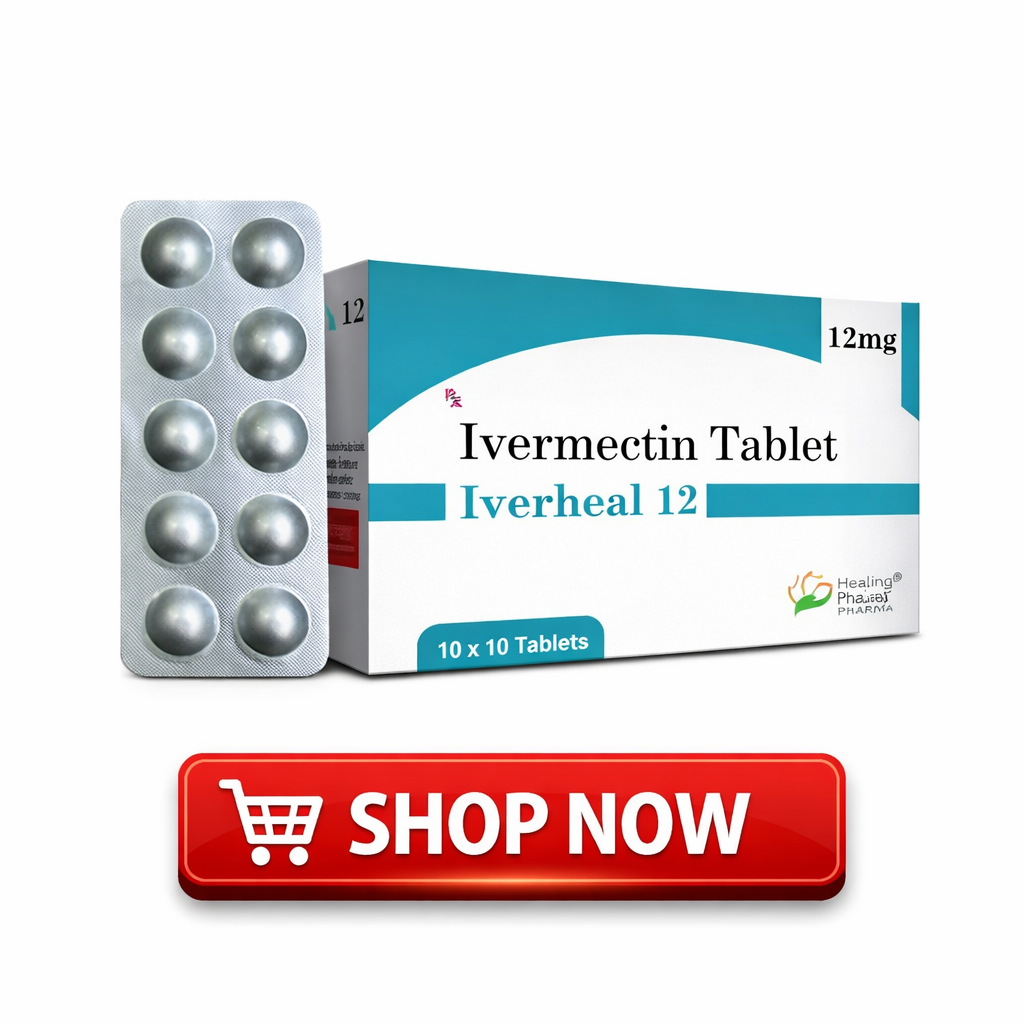
What Is Iverheal 12 Used For? Complete Guide to Ivermectin 12mg
Introduction
Iverheal 12 is a widely recognized brand of ivermectin 12mg tablets — a powerful antiparasitic medication that has transformed global health over the past four decades. Originally derived from a compound found in soil bacteria, ivermectin earned its developers the Nobel Prize in Physiology or Medicine in 2015 and remains one of the most important drugs in the fight against parasitic diseases.
Today, approximately 250 million people receive ivermectin annually through mass drug administration programs, primarily in Africa, Asia, and Latin America. The 12mg strength (as found in Iverheal 12) is commonly used for adult weight-based dosing across multiple parasitic conditions.
This comprehensive guide explains exactly what Iverheal 12 is used for, how it works, proper dosing, safety considerations, and what it should not be used for.
What Is Iverheal 12?
Iverheal 12 contains 12 mg of ivermectin, a macrocyclic lactone antiparasitic agent. It belongs to the avermectin class of compounds originally isolated from Streptomyces avermitilis, a bacterium discovered in a Japanese soil sample in the 1970s.
The drug works through a unique mechanism of selective toxicity — it paralyzes and kills parasites by targeting nerve channels that exist in invertebrates but not in humans. This makes it remarkably safe when used at appropriate doses for approved indications.
Key Facts:
- Listed on the WHO Model List of Essential Medicines
- Available as generic ivermectin and under brand names like Stromectol, Iverheal, and Mectizan
- Manufactured by various pharmaceutical companies globally
- Requires a prescription in most countries
FDA-Approved Uses of Iverheal 12
1. Strongyloidiasis (Intestinal Roundworm Infection)
Condition Overview: Strongyloidiasis is an infection caused by the nematode Strongyloides stercoralis, a tiny roundworm that inhabits the small intestine. What makes this parasite particularly dangerous is its ability to perpetuate infection indefinitely through autoinfection — a process where larvae mature within the host without ever leaving the body.
Why Treatment Is Critical:
- The parasite can survive in humans for decades with minimal or no symptoms
- In immunocompromised individuals, it can trigger hyperinfection syndrome — a life-threatening condition with mortality exceeding 50%
- Common triggers for hyperinfection include corticosteroid use, organ transplantation, cancer chemotherapy, and HTLV-1 infection
Iverheal 12 Treatment Protocol:
- Standard infection: 200 micrograms per kilogram of body weight orally for 1–2 days
- Hyperinfection syndrome: 200 mcg/kg orally daily until stool and sputum examinations remain negative for at least 2 consecutive weeks
- Follow-up: Stool examination 2–4 weeks post-treatment to confirm clearance
Ivermectin is the treatment of choice for strongyloidiasis, with cure rates exceeding 90% and significantly better tolerability than alternatives like thiabendazole.
2. Onchocerciasis (River Blindness)
Condition Overview: Onchocerciasis is a devastating tropical disease caused by the filarial nematode Onchocerca volvulus, transmitted through the bites of infected blackflies (Simulium species). Adult worms live in subcutaneous nodules for 10–15 years, releasing millions of microfilariae that migrate through skin and ocular tissues.
Clinical Impact:
- Severe, debilitating itching and skin disfigurement
- “Leopard skin” depigmentation and hanging groin
- Progressive eye damage leading to permanent blindness
- Affects over 20 million people, with 1.15 million suffering vision loss
Iverheal 12 Treatment Protocol:
- Dose: 150 micrograms per kilogram as a single oral dose
- Frequency: Every 6–12 months continuously for 10–15 years
- Mechanism: Kills circulating microfilariae and temporarily sterilizes adult female worms for 3–6 months
Important Limitation: Ivermectin does not kill adult worms. Elimination requires treating throughout the worms’ entire lifespan. In some regions, doxycycline (200 mg daily for 6 weeks) is added to target Wolbachia endosymbiotic bacteria, which can kill adult worms over time.
Global Impact: The Mectizan Donation Program, launched in 1987, has distributed over 4 billion treatments for free, preventing an estimated 600,000 cases of blindness.
Widely Used Clinical Applications
3. Scabies
Condition Overview: Scabies is a highly contagious skin infestation caused by the mite Sarcoptes scabiei var. hominis. The WHO recognizes scabies as a neglected tropical disease, with over 200 million cases worldwide at any given time.
Symptoms:
- Intense nocturnal itching (pathognomonic)
- Papular rash and characteristic burrows in finger webs, wrists, elbows, and waistline
- Secondary bacterial infections from scratching
- In severe cases, crusted (Norwegian) scabies containing millions of mites
Iverheal 12 Treatment Protocol:
- Classic scabies: 200 mcg/kg orally, with a second dose repeated 7–14 days later
- Rationale for two doses: First dose kills adult mites; second dose eliminates newly hatched mites before they can reproduce
- Crusted scabies: Multiple doses (typically days 1, 2, 8, 9, and 15) combined with topical permethrin 5%
Critical Requirement: All household members and sexual contacts must be treated simultaneously, even if asymptomatic. Environmental decontamination (washing bedding/clothing in hot water, sealing unwashable items for 72 hours) is essential.
The CDC considers oral ivermectin equally effective as topical permethrin 5% cream for classic scabies.
4. Head Lice (Pediculosis Capitis)
Condition Overview: Head lice infestation affects millions of children worldwide, causing scalp itching and social stigma.
Treatment Options:
- Topical 0.5% ivermectin lotion (Sklice): FDA-approved for ages 6 months and up; single application to dry hair without nit combing
- Oral ivermectin (off-label): 200–400 mcg/kg, repeated in 9–10 days if needed; used when topical treatments fail
5. Rosacea (Topical Formulation)
While not an oral use of Iverheal 12 tablets, ivermectin 1% cream (Soolantra) is FDA-approved for inflammatory lesions of papulopustular rosacea. It works through antiparasitic effects against Demodex mites and anti-inflammatory properties.
Other Parasitic Infections (Off-Label/Regional Use)
Table
| Condition | Causative Organism | Typical Dose |
|---|---|---|
| Lymphatic filariasis | Wuchereria bancrofti | 200 mcg/kg single dose |
| Soil-transmitted helminths | Hookworm, roundworm, whipworm | 200 mcg/kg daily for 2 days |
| Cutaneous larva migrans | Animal hookworm larvae | 200 mcg/kg single dose |
| Myiasis | Fly larvae | 250 mcg/kg single dose |
| Gnathostomiasis | Gnathostoma larvae | 200 mcg/kg for 2 days |
How Iverheal 12 Works
Mechanism of Action
Ivermectin exerts its antiparasitic effects through a highly selective mechanism:
1. Target: Glutamate-Gated Chloride Channels (GluCls)
- These ion channels are present in invertebrate nerve and muscle cells
- They are absent in vertebrates, including humans
- Ivermectin binds to these channels at nanomolar concentrations, causing irreversible opening
2. Result: Paralysis and Death
- Chloride ion influx hyperpolarizes parasite cells
- Paralyzed parasites cannot feed, move, or reproduce
- Intestinal nematodes are expelled; ectoparasites die in situ
3. Reproductive Effects
- In filarial worms, ivermectin temporarily sterilizes adult females
- Prevents release of microfilariae for 3–6 months
Why It’s Safe for Humans
The P-glycoprotein (P-gp) efflux pump, highly expressed at the human blood-brain barrier, actively pumps ivermectin out of the central nervous system. This prevents the drug from reaching concentrations that could affect mammalian neural tissue.
Species Differences: Certain dog breeds (collies) and horses with MDR1 gene mutations lack this protection and are highly susceptible to ivermectin neurotoxicity. This underscores why veterinary formulations must never be used in humans.
Dosage Guidelines
All ivermectin dosing is weight-based. The 12mg tablet strength is particularly convenient for adult dosing.
Dosing Table
Table
| Condition | Dose | Frequency |
|---|---|---|
| Strongyloidiasis | 200 mcg/kg | 1–2 days |
| Onchocerciasis | 150 mcg/kg | Every 6–12 months |
| Scabies (classic) | 200 mcg/kg | 2 doses, 7–14 days apart |
| Scabies (crusted) | 200 mcg/kg | Multiple doses over 2–4 weeks |
| Head lice (oral) | 200–400 mcg/kg | 2 doses, 9–10 days apart |
Practical Examples
Table
| Body Weight | Onchocerciasis Dose | Scabies Dose |
|---|---|---|
| 60 kg (132 lbs) | ~9 mg (~1 × 12mg tablet) | 12 mg (1 × 12mg tablet) |
| 70 kg (154 lbs) | ~10.5 mg (~1 × 12mg tablet) | 14 mg (1 × 12mg + 1 × 3mg) |
| 80 kg (176 lbs) | ~12 mg (1 × 12mg tablet) | 16 mg (1 × 12mg + 1 × 6mg) |
Administration Instructions
- Take on an empty stomach with a full glass of water
- Wait at least 1 hour before or 2 hours after eating
- Swallow tablets whole — do not crush or chew
- Exception for scabies: Some clinicians recommend taking with food to increase bioavailability
Safety Profile and Side Effects
Common Side Effects (Generally Mild, <4% of Patients)
- Dizziness
- Nausea and vomiting
- Diarrhea
- Fatigue
- Headache
- Abdominal pain
- Itching or rash (particularly in onchocerciasis patients)
Mazzotti Reaction
In onchocerciasis patients, treatment may trigger an inflammatory response to dying microfilariae:
- Intensified pruritus and skin rash
- Fever, headache, myalgia
- Hypotension and tachycardia
- Lymphadenopathy
These symptoms are usually self-limiting within 24–48 hours but can be severe in patients with high microfilarial loads.
Serious Adverse Events (Rare)
- Severe allergic reactions
- Neurological symptoms (confusion, seizures, ataxia)
- Ocular inflammation
- Cardiovascular disturbances
Contraindications
Absolute:
- Known hypersensitivity to ivermectin
- Loa loa co-infection (risk of fatal encephalopathy)
Relative/Caution:
- Children under 15 kg (limited safety data)
- Pregnant women (Category C; prefer permethrin for scabies when available)
- Breastfeeding women (low risk; <2% excreted in breast milk)
- Hepatic impairment (drug metabolized by CYP3A4)
- Immunocompromised patients (may require extended treatment)
Drug Interactions
Table
| Drug/Substance | Interaction |
|---|---|
| Warfarin | Increased bleeding risk; monitor INR |
| CYP3A4 inducers (rifampin, carbamazepine, phenytoin, St. John’s wort) | Reduced ivermectin efficacy |
| CYP3A4 inhibitors (ketoconazole, itraconazole, erythromycin, grapefruit juice) | Increased ivermectin levels |
| Alcohol | Worsens dizziness and nausea |
| Sedatives | Additive CNS depression |
Always inform your healthcare provider of all medications and supplements before starting ivermectin.
What Iverheal 12 Is NOT Used For
Despite widespread misinformation, ivermectin has no approved or evidence-based use for:
COVID-19
- Not FDA-approved for COVID-19 treatment or prevention
- Large clinical trials (I-TECH, PRINCIPLE, TOGETHER) found no benefit
- Laboratory studies required concentrations 100× higher than safe human dosing
- FDA, CDC, WHO, and NIH all advise against use for COVID-19
- Veterinary product misuse has caused seizures, coma, and death
Viral Infections
Ivermectin is not an antiviral drug. No clinical evidence supports use for influenza, HIV, or other viral illnesses.
Tapeworms or Flukes
Ineffective against cestodes (tapeworms) and trematodes (liver/lung flukes). Requires praziquantel or triclabendazole.
Bacterial or Fungal Infections
No antibacterial or antifungal activity.
Cancer
Preclinical studies suggest potential anticancer properties, but no approved oncologic indications exist as of 2026.
Weight Loss or “Detox”
No scientific basis for these uses.
Veterinary vs. Human Ivermectin: Critical Distinction
Table
| Feature | Human Ivermectin | Veterinary Ivermectin |
|---|---|---|
| Concentration | 3mg, 6mg, 12mg tablets | Often 1% (10mg/mL) solutions or pastes |
| Excipients | Pharmaceutical-grade | May contain toxic solvents |
| Purity standards | Human-grade | Animal-grade specifications |
| Dosing guidance | Weight-based for humans | Designed for specific animal species |
| Safety testing | Human clinical trials | Animal safety studies |
Never use veterinary ivermectin products for human consumption. The FDA has issued explicit warnings following multiple hospitalizations and deaths from veterinary product overdose.
Global Health Impact
Ivermectin’s contribution to global health is immeasurable:
- Mectizan Donation Program (1987–present): Longest-running drug donation initiative; 4+ billion treatments distributed
- Onchocerciasis Control Programme (1974–2002): Prevented 600,000+ cases of blindness in West Africa
- African Programme for Onchocerciasis Control (1995–2015): Pioneered community-directed treatment strategies
- Scabies MDA: WHO recommends mass drug administration in communities with ≥10% prevalence
- Strongyloidiasis Guideline (2024): WHO’s first guideline recommending annual ivermectin MDA in endemic settings
Four countries (Colombia, Ecuador, Guatemala, Mexico) have achieved WHO-verified elimination of onchocerciasis transmission.
Frequently Asked Questions
Q: Is Iverheal 12 the same as Stromectol? A: Yes — both contain ivermectin as the active ingredient. Iverheal 12 is a generic brand; Stromectol is the original brand name.
Q: How quickly does it work? A: Parasite killing begins within hours. Symptom resolution varies: strongyloidiasis improves in 2–3 days; scabies itching may persist 2–4 weeks post-treatment; onchocerciasis skin/eye symptoms improve over months.
Q: Can I take it with food? A: Standard instructions recommend empty stomach administration. For scabies, some clinicians advise taking with food to increase bioavailability. Follow your doctor’s specific instructions.
Q: Is it safe during pregnancy? A: Pregnancy Category C. Permethrin is generally preferred for scabies in pregnant women. Oral ivermectin should only be used if benefits clearly outweigh risks.
Q: Can children take Iverheal 12? A: Caution in children under 15 kg. Recent studies in over 1,000 children under 15 kg showed a 1.4% adverse event rate with all events mild and self-limiting, but guidelines remain conservative.
Q: What if I miss a dose? A: For single-dose regimens, take when remembered. For multi-dose regimens (scabies), take as soon as possible and contact your doctor for guidance on the next dose.
Q: Will it kill all types of worms? A: No. Effective against roundworms (nematodes) and certain ectoparasites. Not effective against tapeworms, flukes, or protozoa.
Conclusion
Iverheal 12 represents one of the most significant achievements in modern pharmacology — a drug born from a soil sample that has saved sight, prevented disability, and improved quality of life for hundreds of millions of people. Its impeccable safety record and broad efficacy against parasitic diseases make it an indispensable tool in both individual patient care and global public health.